
.png)
5 IT Talent Priorities CIOs Must Own in 2026
As AI advances, cyber threats evolve, and clouds become standard; one reality is clear: technology is no longer the bottleneck — talent is.
In 2026, the companies that scale won’t be defined by the tools they use, but by the people behind them. For CIOs, building and evolving the right IT workforce is no longer a priority — it’s the mandate.
Here are five IT talent priorities every CIO must own this year:

1.Creating a Skills-First IT Organization
The pace of technology change in 2026 demands a new way of thinking about talent. CIOs are recognizing that alongside traditional role-based structures, a skills-first layer gives them the flexibility to stay ahead. Work is allocated based on what people can actually do — their capabilities, expertise, and hands-on experience.
"When CIOs invest in mapping their team's capabilities, they stop reacting to talent gaps and start anticipating them."
Making this work requires three things. The organizations that build skills visibility into their operating model will execute faster, adapt quicker, and deliver more consistently — regardless of how the landscape shifts.
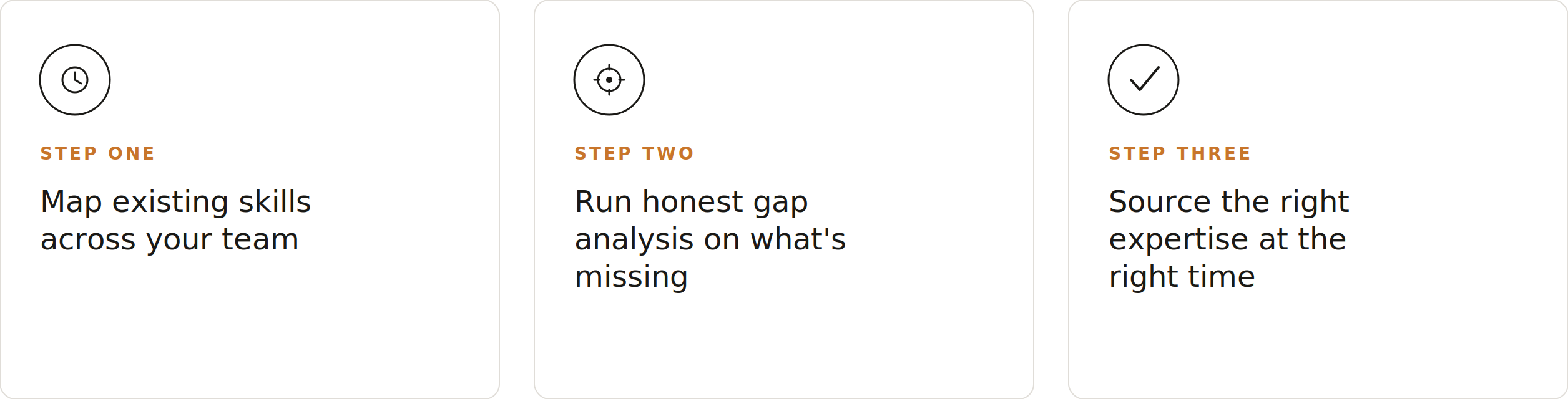
Remote IT talent solutions add real value here — plugging specific capability gaps with pre-vetted professionals, keeping momentum without overstretching existing teams.
2.Closing the Cybersecurity Capability Gap
Cybersecurity is no longer a silo — it's a business-critical function. Yet skilled security professionals remain scarce. CIOs must take a hybrid approach that builds defense in depth across the entire organization.
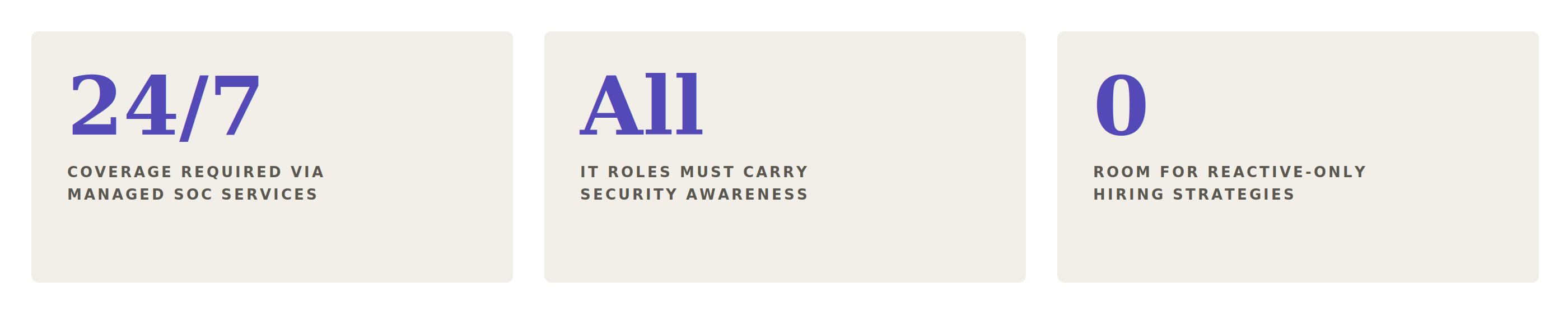
Build internal security awareness across every IT role, not just the dedicated security team
Strengthen dedicated security expertise within your core workforce
Leverage external SOC and managed security services for continuous, round-the-clock coverage
The goal is continuous protection, not reactive hiring.
3.Designing a Borderless Talent Strategy
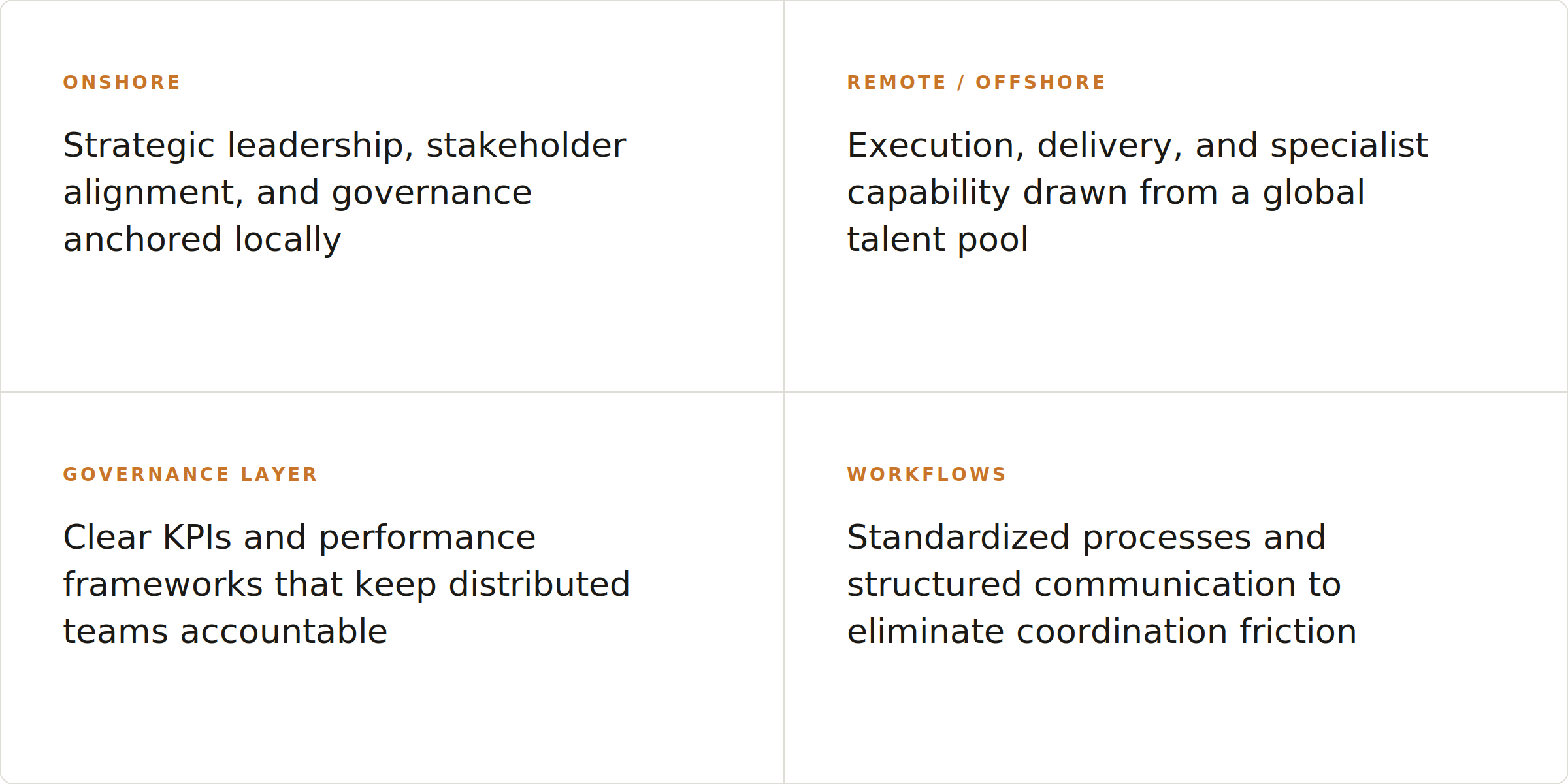
Limiting hiring to a single geography is no longer viable. CIOs need to adopt a borderless talent model that combines onshore leadership with remote or offshore execution — unlocking a wider talent pool while optimizing costs.
4.Building Elastic Workforce Models
Static team structures cannot keep up with dynamic business demands. CIOs must shift toward elastic workforce models that can scale up or down quickly, matching headcount to project cycles rather than org chart inertia.
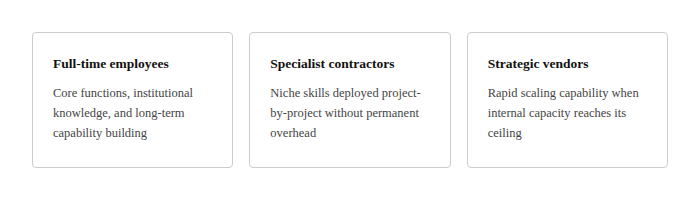
Flexibility is no longer optional — it's a competitive advantage.
The most resilient IT organizations in 2026 won't be the ones with the largest headcount. They'll be the ones with the most adaptive workforce architecture — able to surge capacity when needed and contract it just as quickly.
5.Prioritizing Speed in Hiring and Deployment
In today's market, top IT talent is gone within days. Slow hiring processes directly impact delivery timelines and business outcomes. Every week a critical role sits open is a week of delayed projects, compounding risk, and strategic drift.
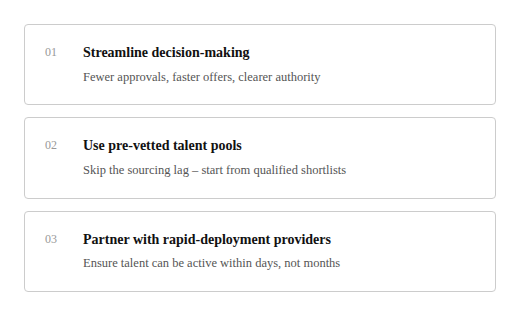
Speed is not just an HR metric — it's a business-critical capability. CIOs who treat hiring velocity as a strategic lever will outpace those who treat it as an administrative process.
CIO success in 2026 will be defined not by technology, but by how effectively talent is built, deployed, and scaled.
CIOs who build agile, skills-driven teams will execute faster and adapt with confidence.
In 2026, the real advantage won’t come from tools — it will come from talent.
Those who don’t evolve will fall behind.